Wednesday, March 20, 2013

Starting Seeds and Transferring Seedlings

I've started thirty tomato varieties, twenty something pepper varieties, two tomatillo varieties, and several cole crops. Some of the tomatoes, peppers, and cole crops have grown a second set of true leaves and are ready for transplanting.


Sometimes people get confused by the term "true leaves". When seeds germinate, the two green leaves that unfurl directly from the seed are called cotyledons. The next set of leaves to grow will be more distinctive to that species of plant, and are the first set of "true leaves." This year, I have decided to transplant my seedlings from the tiny cell trays to 4" peat pots once they have developed a second set of true leaves. The second set often indicates a healthily developing root system, and though many people prefer to wait until the plant is root bound, I prefer to not have to harm the roots during transplant.


The brandywine tomato seedling is already becoming rootbound. The orange bell pepper seedling was just starting to grow the second set of true leaves, and already has a good root system.


At this point, Quadrapus is all sorts of curious about what I'm doing. And, she's not crouching in the photo. She's really that high...or low. She's a munchkin breed, which have genetically short legs.


I'm not sure she approves of the peat pots. I fill the 4" peat pot with more sterile seedling mix, but I add a spoonful of compost from the pile in the backyard. I poke a hole in the middle of the dirt for the waiting seedling.


Q is all like, "Mmmmmm, dirt..."

I use a spoon to pop the seedling from the tray, letting the dirt stay with the seedling's roots. At this point, I have thinned out any competing seedlings to ensure the healthy growth of a single plant. (I pinch the less robust seedlings with my nails below the cotyledons.) Some people like to tease out seedlings from each other and pot all the plants. I prefer not to damage any root systems that can be especially sensitive at this time of growth, and I get enough plants. But, it's up to you.


Quadrapus thinks I should plant this pepper next.

With tomato plants (and with tomatillos), you can place them into the soil all the way up to the bottom leaves. Roots will form all along the stem below the surface.
With other plants, place in the soil above the crown of the roots.


Once all the seedlings have been planted, I water using a weak organic fertilizer solution. I place them back beneath the grow lights, and in another week, they'll wow me with size and luster.

The leftover seed cells I will use for more planting. I often don't even sterilize them (I know, blasphemous!). I fill them with a sterile seed mix, plant my seeds according to package directions, and place them beneath the grow light.


I keep the soil moist at all times, and I find that beneath the warm glow of T5 HO bulbs, I don't have a problem with damping off fungus killing the little guys.

Here are some more photos of Quadrapus "helping". Apologies for the blurriness.


Happy Planting!

Tuesday, March 19, 2013

Mindful - a poem


Cucumber plant growing in the tree.

Every day
I see or hear
something
that more or less

kills me
with delight,
that leaves me
like a needle

in the haystack
of light.
It was what I was born for -
to look, to listen,

to lose myself
inside this soft world -
to instruct myself
over and over

in joy,
and acclamation.
Nor am I talking
about the exceptional,

the fearful, the dreadful,
the very extravagant -
but of the ordinary,
the common, the very drab,

the daily presentations.
Oh, good scholar,
I say to myself,
how can you help

but grow wise
with such teachings
as these -
the untrimmable light

of the world,
the ocean's shine,
the prayers that are made
out of grass?

- Mary Oliver

Wednesday, March 13, 2013

Spring Crochet

Oh my gosh! Spring is almost here! I am so excited!

I've also been working on three different crochet projects between work, class, homework, and garden prep. Here's a sneak peek:


A new baby blanket! Don't you love these colors? It's Martha Stewart Extra Soft Wool Blend in Buttermilk, Lemon Chiffon, Gray Pearl, and Gerbera Daisy. Choosing the right colors took three weeks of hemming and hawing - I was originally stuck on shades of blue, and while they were beautiful, I wanted something brighter!

I also am crocheting a pair of baby converse, and another hat. I expect to be done with it all by the end of the month! Then I will move on to a light, spring scarf. Can't wait!

Any creative projects that you're working on?

Sunday, March 10, 2013

Hardening Off

It's that time of year!


I have started putting the cole crops and onions into this nifty greenhouse thing I picked up at Home Depot for 25 bucks. It heats up nicely during the day and protects the young plants from the wind and biting cold during the night. I will put these guys into the soil next weekend, but for this week, they will enjoy the safety of the greenhouse while they acclimate to the chilly temperatures. This is a process known as "hardening off", and it's an important to-do step for your seedlings that you've sowed indoors.


Some people use cold frames to harden off their seedlings. Unfortunately, between a full time job and full grad coursework, I haven't had enough time to build frames (you can make some nice ones while upcycling old windows). Or, you can buy already made cold frames.

I am cool with this for now. I will begin loading more cole crops into it this week, and then put them into the ground. When it comes to the tomatoes and peppers, it'll be full up!

How about you? What kind of garden chores are you up to?

Monday, February 18, 2013

Books, Books, and Books


I looooooooooooooooove books. I will start doing some in-depth reviews here, but for now, the following are some gardening favorites:

Grow Great Grub, by Gayla Trail
You Grow Girl, by Gayla Trail
The Edible Front Yard, by Ivette Soler
The Backyard Homestead, by Carleen Madigan
Free Range Chicken Gardens, by Jessi Bloom
All New Square Foot Gardening, by Mel Bartholomew (Honestly, I don't like reading this guy's book. But I do like the square foot gardening method.)

On my reading horizon is Self-Sufficiency on a Shoestring, and Little House in the Suburbs. Plus all the reading I do for grad school, and the reading of novels for fun - so much to read! Certainly helps to pass the time on these precious winter nights.


Sunday, February 17, 2013

Lovin' the Home Life

I love small, daily projects around the house. Every morning, I must tend to these darling little seedlings.


Tomatoes, peppers, cabbage, broccoli, thyme, cumin, rosemary, artichokes, onions, kohlrabi, cauliflower, celeriac, strawberries, and ground cherries are germinating and sprouting beneath the glow of T5 high output flourescents.


I check on them again in the afternoon. The tomato and pepper seed trays are sitting on heat mats. The rest are simply warmed by the glow of the lights. The set-up is in the basement, so this is the only light they get. The lights are on a timer that turns on at 6 am and turns off at 10 pm.


I feed and check the water for Quadrapus every morning.


She joins me in the evening if I get the chance to sit down and work on my crochet projects or other artsy doings.
I also get to take care of this little guy! Aleister is a leopard gecko and a new addition to our menagerie. He's very lively, and very cute!


I have to feed and water the chickens, too. And I get this in return: 9 eggs in one day!


Then, there is watering all the houseplants! The jasmine has started blooming. The scent of this pretty vine hangs in the air of our living room.


There are multiple plants all over the house: herbs, a lime tree, an avocado tree, an african violet, a spider plant, stevia, bamboo, and pothos in the kitchen; a peace lily, two orchids, the jasmine, a palm, amaryllis, holiday cactus, and a terrarium of tiny plants in the living room, and; an assortment of succulents, wandering jew, pothos, and spider plants in the studio.


Oh! What's that?


LoL. These big angora monsters love to jump up and climb all over the sofa. Wicket is the brown, and Blackula is the grey.


Bunnies! At some point, their fiber will get processed and we'll be able to use it for knitting and crocheting projects!


Of course, there's no forgetting the apple of my eye, who needs to be fed twice a day and snuggled at night.


Yeah, I'd say the home life is pretty sweet!

Saturday, February 16, 2013

Pining for Peeps

Our shipment of chicks arrives the week of May 6th. And I am dyyyyyyyyyyyying.

Seriously. Though, in reality, it's an ideal time. They arrive in the last week of my school semester. I will have time to devote to their early upbringing. The first week is the most stressful, as the chicks have just hatched and a few of them die. Last year, we had six chicks shipped. One arrived dead, and another died within two days. A third weakened within the week, and we ended up taking her to the vet. She is now a lively and healthy Bubo.

Bubo, a Golden Sebright
Our ten gallon tank will be furnished with sand, a screen cover, and a heat lamp. We have a waterer and feeder. I will have PediaLyte and baby parrot food on hand for any chick that looks like it won't survive. I will do my best to not have any casualties.

So, you want to know what kind of chickens I ordered? Of course I'd love to tell you! ;)

Blue Andalusian - a white egg layer developed in Spain

Black Copper Marans - a layer of super dark brown eggs and rare in the US

Blue Cochin - a brown egg layer and a Chinese strain of chicken

Blue Splash Marans - a dark brown egg layer

Buff Orpington - Brown egg layers and great personalities

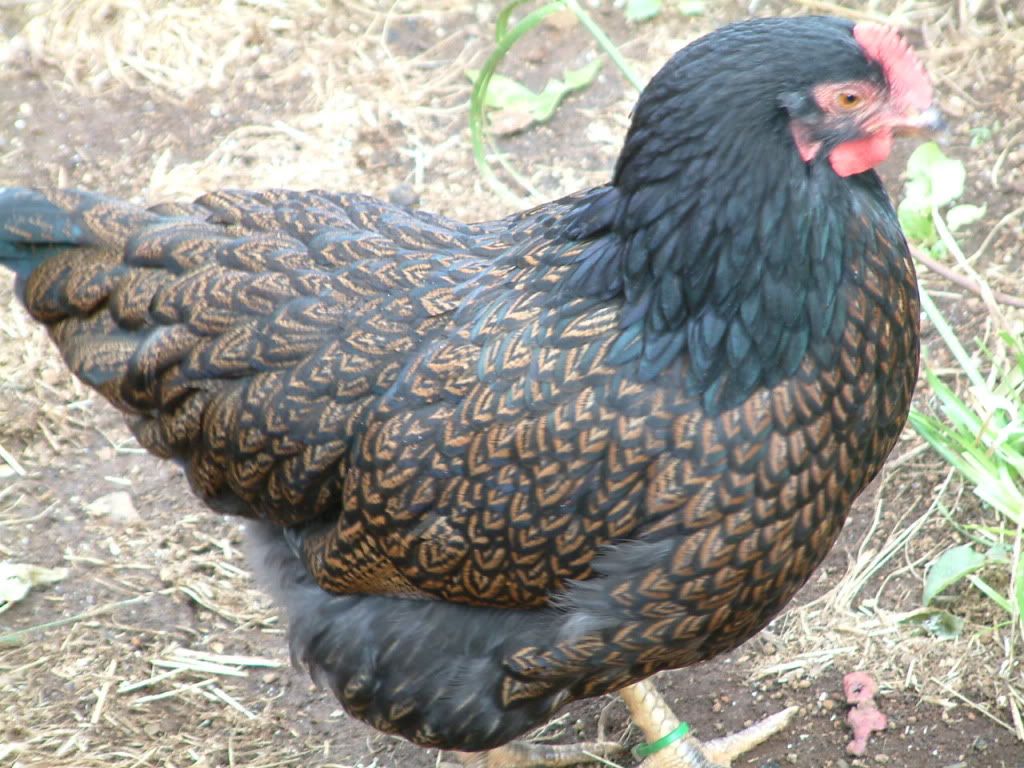
Silver Laced Wyandotte - dependable and gorgeous brown egg layer

Blue Silkie - Funny, funny bird, from China

Easter Egger - we already have two, and they come in a plethora of colors

Partridge Silkie - LMAO

Mille Fleur d'Uccle - Funny little French chicken with gorgeous feathering

Appenzeller Spitzhauben - I will never be able to take this chicken seriously.

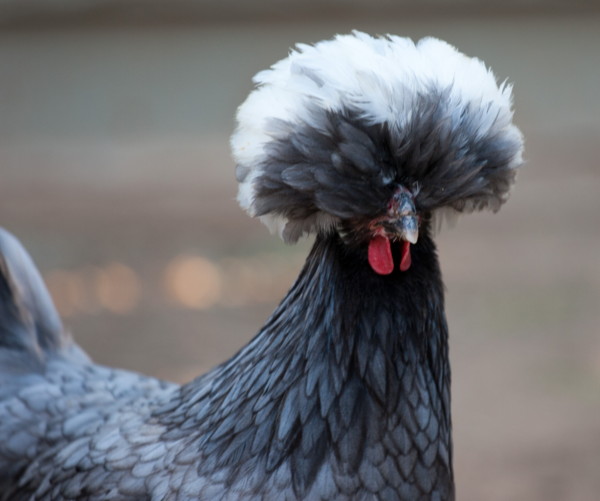
White Crested Blue Polish - I'm going to love this chicken.
White Crested Black Polish - I had a little roo of this kind when I was a kid.

Buff Lace Polish - Yep. That's a real chicken.


Possible substitutions:

Hatcheries give you the opportunity to sub chicks if for some reason a breed you ordered is not available on the day yours is supposed to ship. Our choices for substitution were:

Double Laced Barnevelder - layer of chocolate brown eggs

Buff Silkie - funny looking chicken


 As you can see, we come at this chicken keeping thing with a big sense of humor. How can you not when there are so many ridiculous looking breeds! And all the gorgeous breeds... Plus, our assortment of eggs is going to be the bomb.

What are your favorites?


Friday, February 15, 2013

Pepper Favorites

I grow a variety of peppers each year, mostly to test varieties out. Also, because I end up with a crazy supply of pepper seeds.

I've decided I am really looking, this year, for a sweet variety that is prolific and delicious. I have many varieties started, so I will really pay attention and decide what ones are worth starting next year.

But, I do have some favorites, especially of the spicy variety.

Spicy

The compound that make the spicy peppers spicy is called capsaicin. It is an irritant that most likely developed as a deterrent against herbivores, and perhaps fungi. And we humans loooove some of the spicy for our cuisines.

Joe Long Cayenne - They weren't kidding when they called these guys long. This is a very prolific plant with good sized, hot fruit. I love watching these peppers turn red; they look amazing. I picked them and place them on top of my fridge to dry, and then stored them in a jar. I've put them into chilis and added them to a couple jars of pickles I canned. They lend plenty of spice!

Mustard Habanero - To be honest, I haven't tried other habanero types. I will sometime, but for right now, this plant does the job. It grows a ton of mustard colored, wrinkled habaneros that are super hot. Last year, my friend Liz Lemon* made an habanero jelly that was AMAZING. I am definitely going to make it this year to give out as presents - and to have on top of my cheese and crackers. Baked sweet 'n' spicy brie, anyone?

Fish Pepper - This is a gorgeous pepper plant with variegated leaves and striated fruit that can grow in different colors. The peppers are not as spicy as habanero or cayenne, but they do have a bit of a kick. I plan on planting a few of these out in the front yard among the flowers for added interest. I just love looking at them!

Sweet

Of course, who doesn't love sweet peppers? Lover and I eat quite a few of them in our meals.

Miniature Yellow Bell - I love miniature sweet peppers. I find the plants to be more prolific than the the large bell peppers, and they are easy to eat as stuffed appetizers, plus to throw in to omelets or main dishes. They also look super cute.

I don't have any other sweet peppers to recommend, as I haven't had super exciting results with many other varieties I have grown. I am going to make a valiant effort this year to grow the seven sweet varieties I have under the best conditions and find out if any of those are worth growing again. Anyone out there have any recommendations??

*This is not the real Liz Lemon, nor is that my friend's real name. But who doesn't want to be friends with Liz Lemon?

Wednesday, February 13, 2013

Tomato Favorites

I thought, being this is the month many New Englanders are starting seeds for this year's garden, I might list some favorite tomatoes.

I tend toward heirlooms (with one exception) because of their exceptional flavor and myriad of colors and forms. Hybrids are okay, but I buy only organic seed or seeds from environmentally responsible companies. I don't like to think of the chemical fertilizers and pesticides raining down on parent plants to provide billions of seed packets to the populace. These pollutants get into the ground, and drain toward the ocean. Once they hit the ocean, they contribute to ocean acidification (lowering the pH of the entire ocean is not a good thing) and general pollution and poisoning of the food chain (which ends up back on our plates - google "bioaccumulation" just for funsies).

But I digress. I could talk environmental science all day.

Today's "Favorites" post is all about tomatoes. Not chemical run-off.

Cherry

A cherry tomato is just that - a tomato that is not much bigger than a cherry. Some are smaller. They tend to grow in dense clusters. I've read they originated in South America, and have been cultivated since the 1800's. Neat!

My favorite varieties are:

 Sungold Hybrid - I was first given a packet of these by an ex-lover. When I popped that first fully grown sungold tomato into my mouth, I found myself sinking into a juicy, tangy euphoria. Summer Lovin', is what these little tomatoes whispered to me. What I thought would be just a summer fling ended up almost being a unrequited love story. The one that got away and all that. I spent years trying to find these tomatoes in heirloom vegetable magazines and in the organics shelves at the garden stores. When I discovered that they were a hybrid variety, my heart sank a little. But no relationship is ever perfect. I had sworn off hybrids because I like saving seed from year to year. I would have to make an exception for this perfect salad topper. Though, honestly, many of these do not make it inside my house. I usually end up eating them as they ripen on the vine.

Mexico Midget -These are teeny-tiny bundles of taste explosion. Good things really do come in small packages. I received this as a transplant one year from Seed Savers. This, and the Cherokee Purple I received, were my favorite in the bunch. I had no idea so much tomato flavor could be packed into such a tiny tomato. Last year, I did not get to plant any. AND I MISSED THEM. This year, that has been remedied. Because they are so prolific, plenty of them made it inside the house to be used in salads.


Paste

Paste tomatoes are fleshy without being juicy, and are nearly seedless. This makes them a great base for sauces and canning.

Amish Paste - I love this tomato. It's a large, meaty, Roma-type that is oxheart shaped and sweet to taste. This tomato is excellent for cooking, sauces, and for canning. Yet, I will often slice them up for salads and sandwiches, as they are good enough to eat plain. I plan on growing three plants this year (I usually only have one.)

San Marzano - This is an Italian paste tomato that is heralded as the best paste tomato in the world. It has a thick flesh with few seeds, and a strong, sweet flavor. I will grow two of these plants this year. I love making tomato paste, pasta sauce, pizza sauce, and canned whole tomatoes. Roasted is delicous, too!


Beefsteak

Beefsteak tomatoes are usually big and juicy, and are wonderful to eat straight from the garden. This type of tomato is popular sliced for veggie and meat burgers, or for the top of salads. Some people really like to use them for salsas, too.

Cherokee Purple - This is my favorite of all. It's large, very juicy, sweet-tasting, and dusky in flavor. I also love it's dark color, which permeates all through the flesh. The plants are prolific, unlike many other beefsteak heirlooms. Can't wait to slice these up with a little salt and pepper. Some days I would just bite into one like it was an apple. Yum yum.

Brandywine - Second favorite beefsteak type. Wonderfully sweet with just enough acidity to offset the sweetness. The plant isn't very prolific, but the tomatoes are awesome enough to grow at least one plant anyway.

Black Krim - Third favorite. Nom nom nom  nom. All this talk of all these delicious tomatoes is really gearing me up for summer. As of right now, these are all simple sprouts under grow lights in the basement! Anyway, Black Krim has a fantastic, intense flavor with a slightly salty taste. If you're looking for a beefsteak variety that's not too sweet, this is the tomato to turn to.

This year, I am growing Yellow Stuffer, Pink Zapotec, and Green Zebra, as part of the search to discover a favorite stuffing tomato. Tell me, what are you growing, and do you have a favorite? Why?